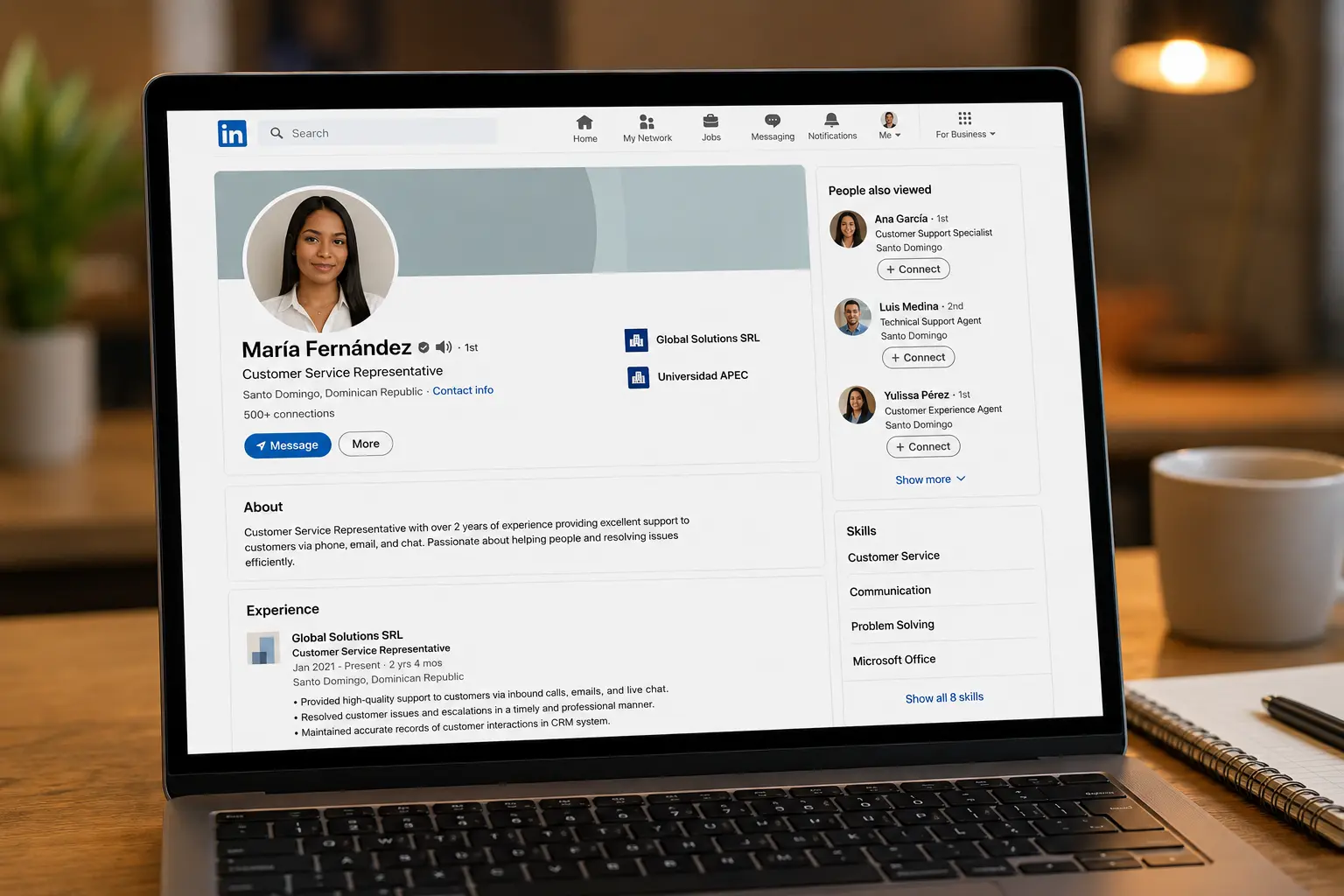
This post is for the call center candidate who just got told they need a LinkedIn profile. Maybe the recruiter mentioned it. Maybe you saw it on the job posting. Maybe someone told you that you need to "be on LinkedIn" to get hired. Before you spend an afternoon building a profile you may never need, read this first.
What LinkedIn was supposed to be
LinkedIn launched as a professional network. The idea was simple: create a profile, connect with people in your industry, and let recruiters find you. For a long time that's exactly what it was. A recruiter would search for a customer service representative in Santo Domingo, your profile would come up, they would send you a message, and a conversation would start.
That version of LinkedIn still exists. But it's buried under something much louder and much less useful.
What LinkedIn has become
LinkedIn in 2026 is a performance platform. What you see when you scroll through your feed is not professional networking. It's people celebrating their first day at a new job, posting motivational quotes, sharing screenshots of compliments their boss gave them, and announcing promotions with the same energy you'd expect from a graduation ceremony.
None of that is networking. It's content. And the algorithm rewards it the same way Instagram and TikTok reward content: with views and likes that feel like progress but don't actually get you anywhere.
The reach on LinkedIn has dropped significantly since its peak. The platform has become more crowded, more competitive, and more dependent on paid promotion. The people you see doing well on LinkedIn are mostly people who already have large followings, pay for premium features, or post constantly as part of a full-time content strategy.
That is not you. And that's fine. Because you don't need any of that to use LinkedIn for what you actually need it for.
The algorithm doesn't care about you. The recruiter might.
Most LinkedIn advice treats it like a social media platform where your goal is to grow an audience. That is not your goal. Your goal is to get a job at a specific call center.
You don't need likes. You don't need views. You don't need followers. You need a profile that makes a recruiter stop scrolling when your name comes up in their search. That's it. That's the whole game for you.
The one question you need to ask before creating an account
Does the call center you want to work for use LinkedIn?
Not all of them do. Some call centers in the Dominican Republic do all of their recruiting through WhatsApp, internal referrals, and their own application portals. If the company you want to work for is not actively using LinkedIn to find candidates, a LinkedIn profile will not help you get hired there.
So before you create an account, look them up. Search the company name on LinkedIn. Do they have a company page? Are they posting job openings there? If the answer is yes, create an account. If the answer is no, skip it entirely.
If you do need it, here is the minimum that works
Your headline is the most important line on your profile. It sits right under your name and it's the first thing a recruiter reads. Don't write your job title from your last position. Write what you do and what you're looking for. Something like: Customer Service Representative | Call Center Agent | Bilingual English-Spanish | Open to Opportunities.
Your summary should be three to five sentences. Where you are from, how long you have been in the industry, what type of account you want to work on, and that you are available.
Your experience section should match your resume. Same jobs, same years, same titles.
Your profile photo matters more than anything else on the page. Not because recruiters are judging how you look, but because a profile without a photo gets ignored. Use a clear photo with a plain background. Look directly at the camera. Smile.
Your location should say Santo Domingo, Dominican Republic. That's what recruiters search by.
What you do not need
You do not need to post anything. You do not need to comment on other people's posts. You do not need to connect with hundreds of strangers. You do not need a premium account.
All of that is for people who are using LinkedIn as a content platform. You are using it as a professional directory. Set it up, make it accurate, and let it sit there until someone finds you.
The honest advice
LinkedIn is not what it used to be. The algorithm decides who gets seen and who doesn't, and it does not favor the new candidate with a fresh profile and no connections.
But it still works for one specific thing: being findable when a recruiter from a company that uses LinkedIn searches for someone like you.
Check first. If the company uses it, build the minimum. If they don't, don't waste your time.