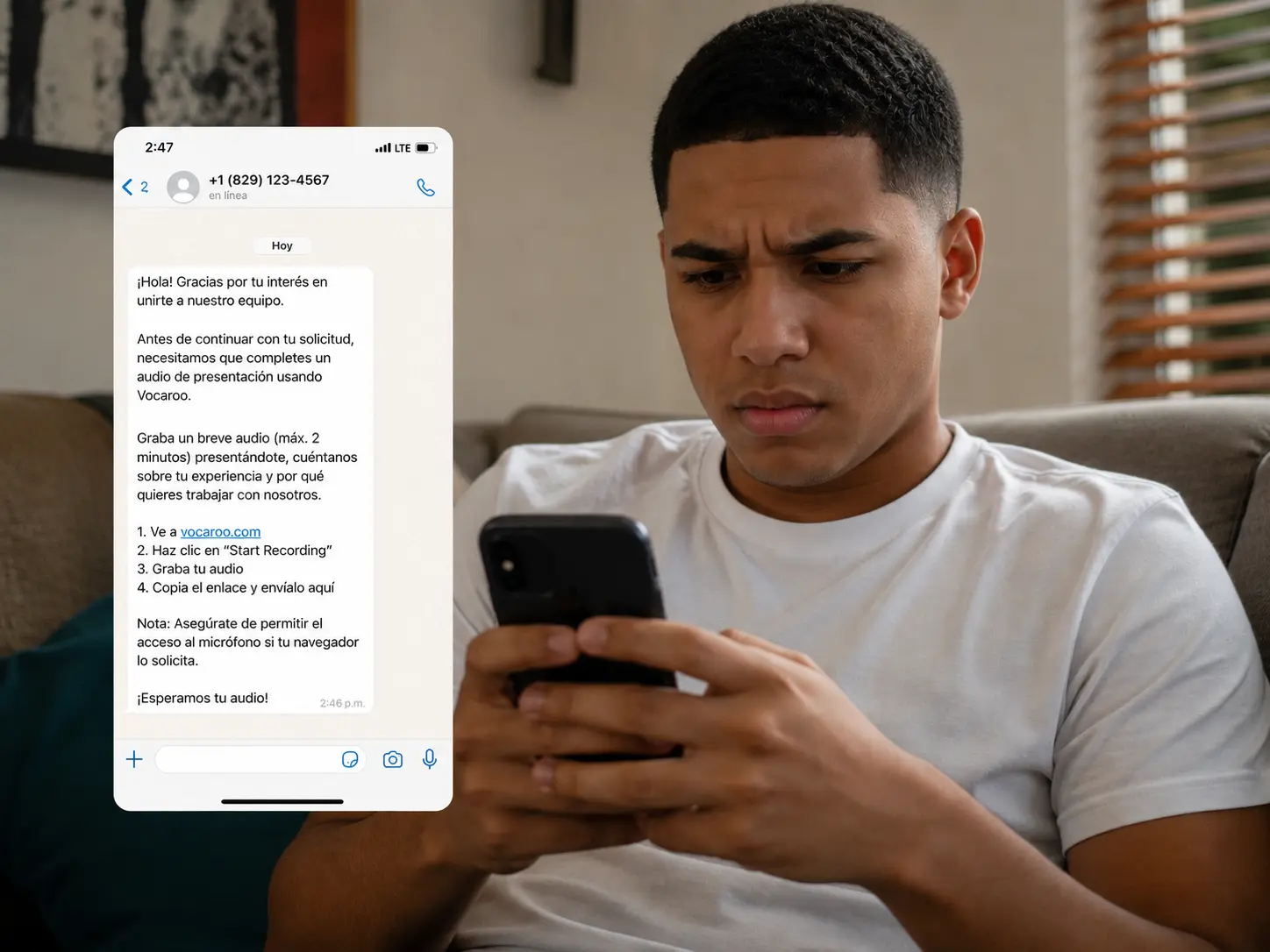
This post is for the candidate who just received a WhatsApp message from a recruiter with instructions they don't fully understand. Or the one who found a job listing, applied online, and then got a reply asking for things they've never heard of before. The call center application process has changed. This is what it looks like now and why it feels so chaotic.
What the application used to look like
A few years ago, applying to a call center was straightforward. You sent your resume by email or showed up in person. Someone called you. You came in for an interview. Maybe a phone screen. They offered you the job or they didn't.
That version still exists in some places. But a growing number of companies have added steps that candidates were never prepared for.
What they're asking for now
Today a recruiter might send you a single WhatsApp message that says something like: "Please send us a one-minute video introducing yourself, a Vocaroo audio link, and your updated resume in PDF format."
That's three things you may have never done before, delivered through a messaging app, with no further explanation.
The video resume is a short recording of yourself speaking in English, introducing who you are, your experience, and your availability. The call center watches it to evaluate your spoken English before deciding whether to move you forward.
Vocaroo is a free website where you record your voice and get a shareable link. The call center listens to your recording to evaluate your pronunciation and how you communicate.
The PDF resume is your traditional resume saved as a PDF and sent through the same WhatsApp conversation.
None of this is explained in the job listing. You're expected to figure it out.
Why the process changed
The industry is understaffed. There aren't enough recruiters to interview every single candidate who applies. So companies found ways to pre-screen large numbers of people without scheduling individual calls.
A recruiter can watch fifty one-minute videos in under an hour. They can listen to fifty Vocaroo recordings in the same time. They can sort resumes in minutes. The entire first round happens without a single conversation.
It's efficient for them. It's confusing for you. And that gap, between what they expect and what candidates are actually prepared for, is exactly why CCA exists.
What this means for you
The candidates who move forward are the ones who show up prepared. Not perfect. Prepared. The recruiter watching your video isn't looking for a TV anchor. They're looking for someone who sounds calm, speaks clearly enough to be understood, and knows what they're talking about.
The candidates who get filtered out are the ones who panic, improvise, or simply don't respond because they don't know what to do.
Every single one of these tools has a post on this blog. The video resume, the Vocaroo audio, the PDF resume. We cover all of it. You don't have to figure any of it out alone.
One thing that hasn't changed
The call center still wants the same thing they always wanted. Someone who can communicate clearly in English, show up reliably, and handle a customer without falling apart. The tools they use to find that person changed. What they're actually looking for didn't.
Everything they're asking for now is something you can prepare for in advance. And preparation is the only thing separating the candidates who move forward from the ones who disappear.