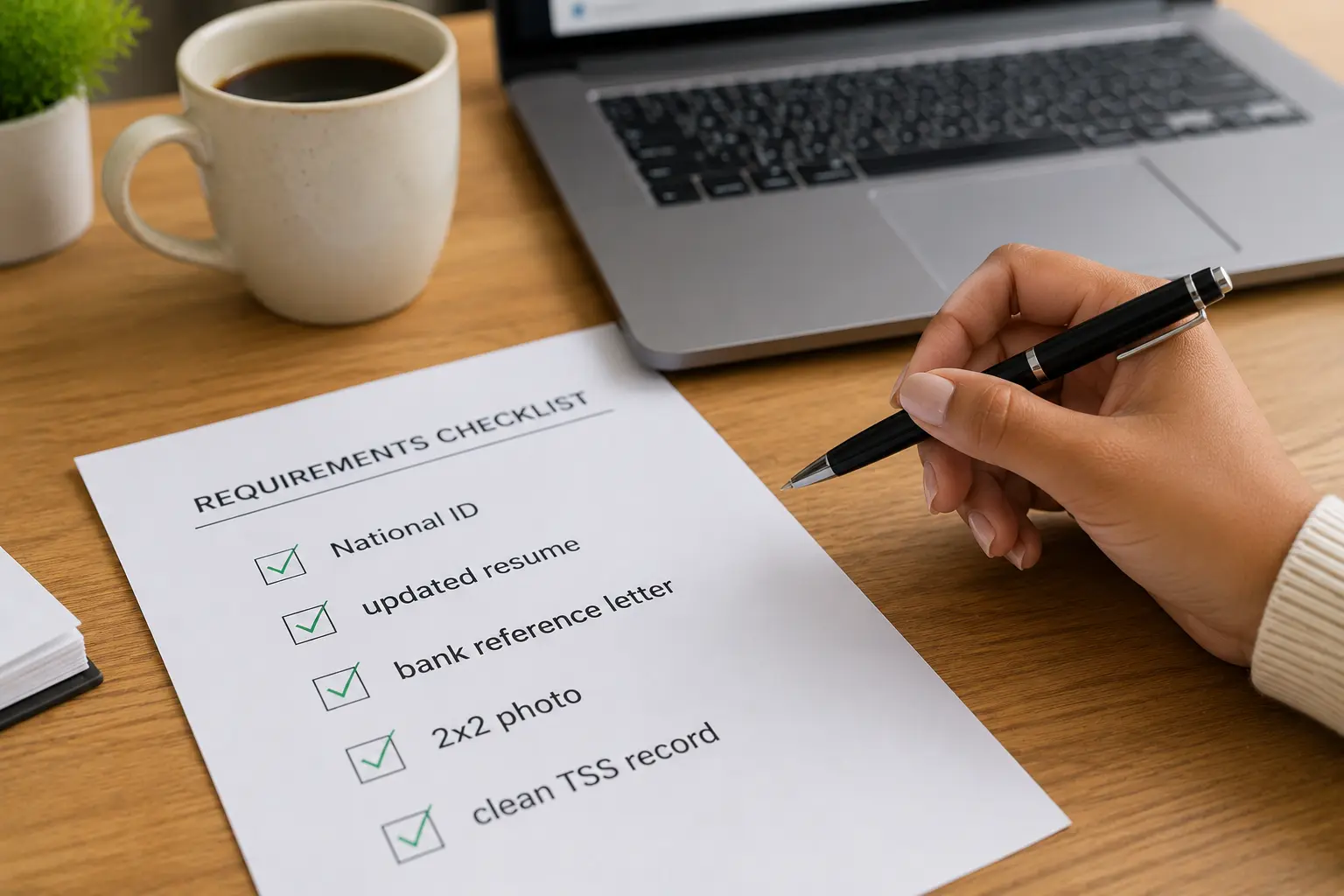
This post is for the person who opened a call center job posting on Instagram and saw a long list of requirements. Age. National ID. High school diploma. Criminal record. Lab test. And closed the tab feeling like getting into a call center was as complicated as applying for a visa.
It's also for the person who has been wanting to apply for weeks and hasn't done it because their documents aren't fully in order and they assume that disqualifies them automatically.
And it's for the person who has everything in order but still hasn't gone. Because of the English. Always because of the English.
For all of you. The requirements list has a lot less power than it looks like. And there is one thing that actually decides whether you get in or not. Let's go through it.
If you searched for the requirements to work in a call center in the Dominican Republic and found a long list of conditions, documents, and qualifications, take a breath. Most of that is noise. There is one thing that actually decides whether you get hired. But first, the real list.
What you need before the interview
Three things. Only three.
Be 16 or 18 years or older, depending on the call center. Many are currently hiring from age 16, some ask for parental consent, others don't ask too many questions. Have a national ID, or a work permit if you're not Dominican. Have a high school diploma, or at least be enrolled.
That's it. That's what gets you to the interview.
What they might ask for after
If you pass the interview and the process moves forward, some call centers will ask for a criminal background check and a lab test. The lab test includes, in many cases, a drug test and a pregnancy test. There is an active debate about whether the pregnancy test is legal. While that debate gets sorted out, they're going to ask for it anyway. Not every call center asks for the same things. Each one operates by its own rules.
And here's something nobody tells you about the lab test until you show up that day: it's supervised. A nurse or technician goes into the bathroom with you to make sure the sample is yours. Yes, exactly like you're reading it. Some call centers do this because of past experiences. Is it fair? Is it legal? There is debate. But it happens, and it's better to know before it catches you off guard.
A practical tip: arrive well hydrated. Drinking water before you go makes the visit faster and easier.
What happens between the interview and day one
This is something nobody explains to you and that can mess with your head if you don't know about it beforehand.
In the best case, you do the interview this week and start working next week. That happens. But in many call centers, the process runs by classes. They have a minimum number of people they need to open a training class, and until they complete that number, they don't call anyone. That means you can have passed the interview, submitted your documents, done everything right, and be sitting home waiting for days or even weeks without any news.
It's not that they cut you. It's that they're filling the class.
That silence affects a lot of candidates more than it should. They start thinking something went wrong. That the call isn't coming. That they should keep applying elsewhere. And that uncertainty adds a level of anxiety they didn't have when they walked out of the interview.
If they call and tell you that you passed, ask when the class starts. If they don't have a date yet, ask how often you can check in. Stay available. And don't let the silence tell you a story that isn't true.
The honest part
If you have everything in order and don't speak English, you're not going to pass the interview. The lab test, the documents, the paperwork, none of that matters if you don't speak English because the process stops long before any of that comes up.
Why English is the only requirement that actually matters
Call centers in the Dominican Republic are facing a serious staffing shortage right now. They're not in a position to turn away candidates over paperwork. What they cannot negotiate is English, because without it the agent cannot do the job. That is the one requirement that never gets waived, never gets negotiated, and never has a workaround.
If you don't speak English, the entire requirements list means nothing because you'll never reach the point where that list matters. Forget the list and ask yourself one question: how is your English? That's the only one that counts.